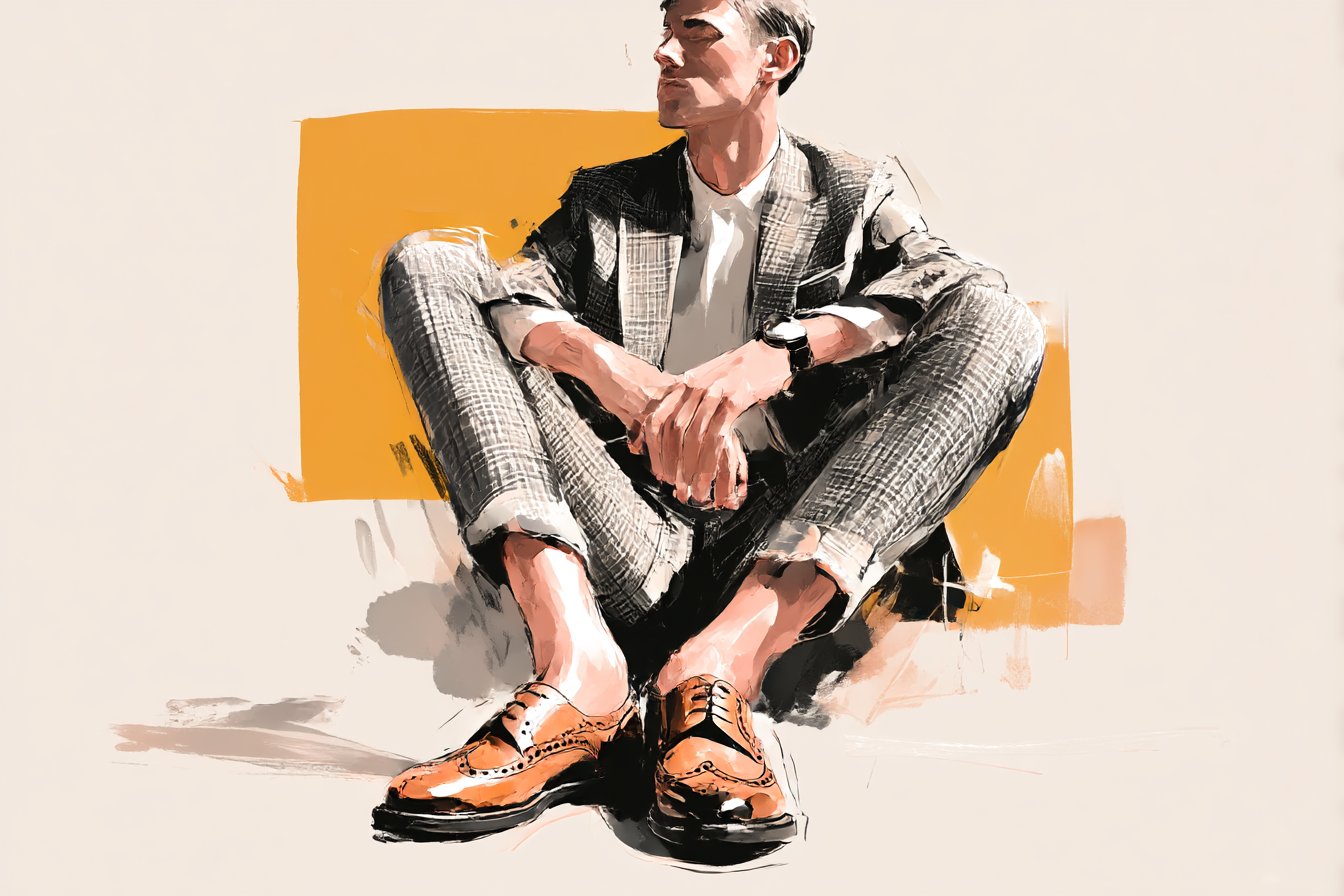
There were three things that were passed down to me when my Grandfather died: his collection of vinyl jazz records (which are still awesome), his handwritten recipe for Christmas pudding (literally illegible but I try and fail to decipher every December), and a pair of bench-made Oxford shoes older than me from a Northampton shoemaker. They were special shoes. Not just because of how they were made or how long they lasted, but because they had slowly become part of him.
Decades of his leather molding to the shape of his feet, had made them fit perfectly. They were unique. They were, essentially, partly history.
But they also – full disclosure – would have looked completely at home on a geography teacher’s feet at a funeral. Well made?
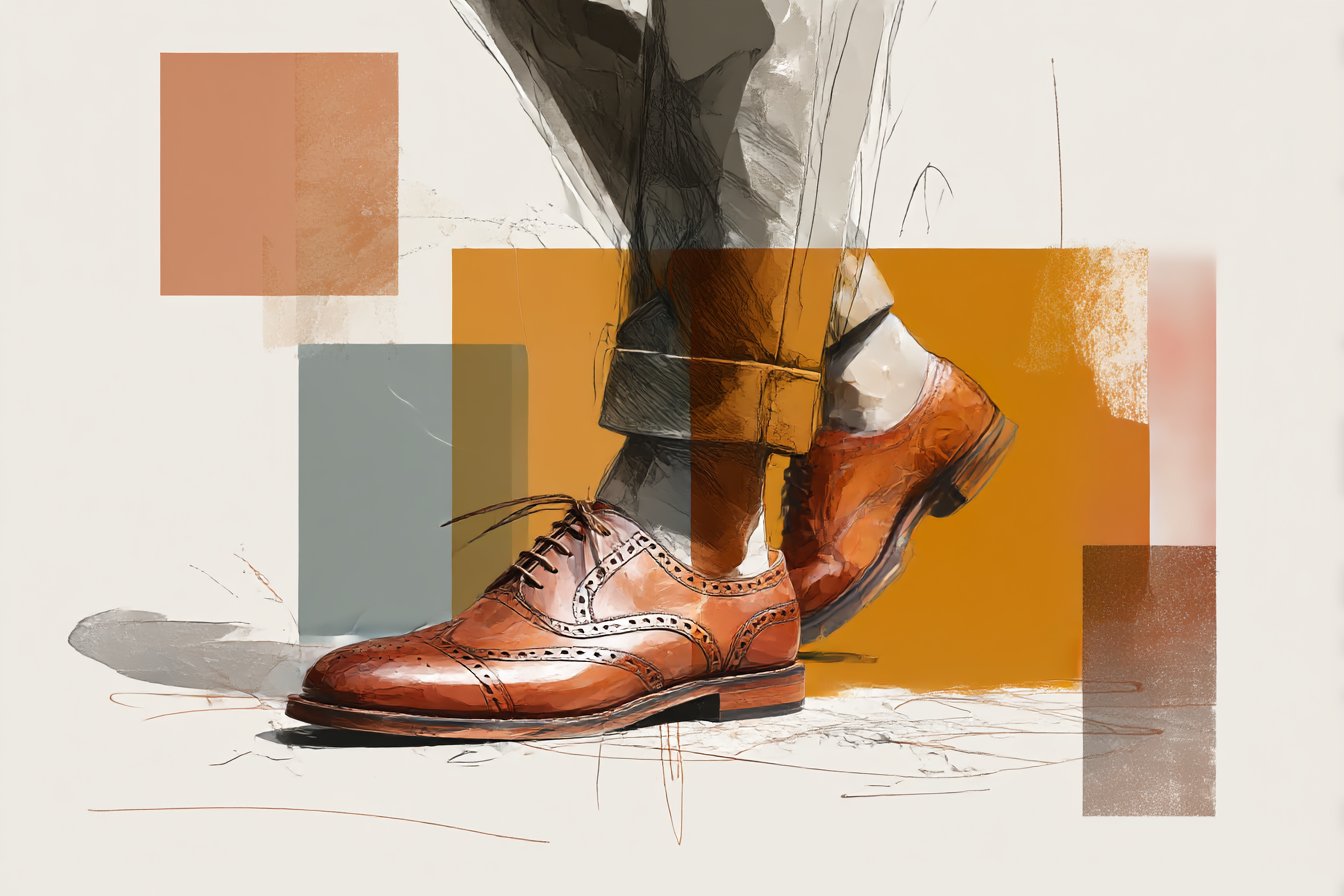
Beyond doubt.
On trend? Hell no. This is the funny thing about British shoes: for generations our shoemakers have had the best pedigree in the world.
Craftsmen learning skills from their fathers and grandfathers going back centuries. But for far too long they were only applying those skills to making exactly the same traditional styles of shoes that hadn’t really changed since the Victorians. Classics; sure.
The only styles of shoe that will ever really matter? Of course. But British footwear has changed a lot over the last few years, with a new generation of shoemakers applying those heritage skills to way more contemporary styles.
Good God ye can thank Christ for that because literally nobody can live on brogues alone. I spent the better part of last month getting schooled by some of Britain’s most forward-thinking shoemakers while researching a feature on the changing face of British footwear. It’s exciting time to be a shoe nerd in the UK.
In factories where they’ve been producing shoes the same way for generations, you’ll suddenly find totally left-field shapes being prototyped on benches next to traditional lasts; radical new techniques being applied to old-world methods; young designers rethinking and reshaping an industry that had, for better or worse, started to rest on its considerable laurels. Look at Tricker’s of Northampton for example. One of the oldest shoemakers in England (they were established in 1829 – which, remember, makes them relative upstarts by Northampton standards).
Tricker’s came to fame on the (still stunning) durability of their heavyweight country brogues. Shoes so beautifully crafted they could’ve probably survived the apocalypse. They were magnificent – but about as cutting-edge as an old tweed waistcoat.
They’re still making those shoes today and, trust me, they still pass the apocalypse test. But they’re also collaborating with Japanese brands; playing with interesting shapes and materials and finishes; creating contemporary hybrids that understand and celebrate their heritage but refuse to be bound by it. I met up with their workshop manager (who’d started working there as an apprentice 34 years ago) to chat about this new-old British footwear scene. “The skills and techniques we use haven’t changed,” he told me whilst obsessively inspecting the welt on a boot-in-progress with a magnifying glass, “But how we apply them has.” He pulled out a totally rad brogue boot they’d recently completed as part of one of their collaborations with a Japanese designer.
Traditional construction but with a much chunkier sole and an unusual treatment on the leather combined with some unexpected color blocking. It shouldn’t’ve worked but was actually really exciting to see. “Guys like me would’ve had heart attacks looking at designs like that twenty years ago,” he laughed. “These days they’re some of our biggest sellers.” I met Sebastian Tarek (below) who trained in traditional methods but now makes some of the most avant-garde shoes you’ll find being handmade in Britain today. Based in East London, he’s working within the confines of an extremely old-school craft using tried-and-tested techniques whilst completely rethinking what those shoes actually look like.
His workshop is a masterclass of the old and new; racks of century-old lasts sit alongside screens on his computer for digital design. “The techniques need to survive,” he told me whilst showing me around as we admired one of his incredible side-laced boots that looked more like modern art than footwear, “but they shouldn’t just be applied to copying styles from 1920.” I also spent a lot of time thinking about sustainability while I was researching this article. Traditional British shoes have always been built with longevity in mind – they’re constructed to be mended, not thrown away when they get worn out – but newer brands are taking that one step further. When I visited the Blackhorse Lane workshop (who operate a small collective of shoemakers under one roof) I met Eleanor who is very deliberately using leather from UK tanneries who still practice traditional vegetable tanning methods over widely used chrome tanning. “We want to preserve ways of working with leather that aren’t just effective but are also responsible.” she told me, cutting out a pattern with her massive rotary cutter. “It’s the whole package.” She showed me a pair of shoes she was working on which blended traditional welted construction with simple, modern, almost minimal uppers.
No brogue details, no weird cap toes, nothing that says “English shoe”. Instead they were sleek but not flimsy, sturdy but not heavy. I tried on a pair of her Derby boots and promptly joined the three-month waiting list.
You Might Also Like

Not cheap at £450 a pair but when you know exactly who made your shoes, where they’re made, how the leather was sourced and that they’re designed to last decades – you feel like you’re getting some value back. Obviously none of us can drop four figures on a pair of shoes however good they may be. The great news is that this British footwear revolution is happening at every price point.
Brands like Grenson have been marrying traditional production with modern design for years now and do wonderful things at what are still fairly reasonable prices. They took their traditional Triple Welt construction and exaggerated it slightly to create something unique, while maintaining the build-quality and craftsmanship that means Grenson will last you years with a little care. Even the stalwarts are branching out.
Visit the Crockett & Jones workshop in Northampton and you’ll see that they still produce some of the most formally beautiful shoes in the world. But they’re also producing unlined loafers in garish colors; boots with wicked-light Vibram soles you’d actually wear outside (imagine that), and casual shoes that actually work with modern wardrobes whilst still upholding their insane standards. “The customer has changed how they think and buy shoes.” their sales director told me. James is the fifth generation of his family to work at the company and noticed this shift towards more casual styles over traditional ones. “Twenty years ago if a guy needed shoes they got two pairs; something smart for work, something casual for the weekend.” Now? “Now they want one pair to do everything.” He pulled out a suede textured leather Derby with a subtly chunky rubber sole.
Not ground-breaking by fashion standards maybe; but considering C&J were making boots for British officers during WWI, revolutionary for them. “We’ve had to adapt what we produce to meet our customers’ demands.” The return of bespoke and made-to-order shoemaking at lower price points is also really exciting to see. Traditionally if you wanted a bespoke shoe in Britain it was a) prohibitively expensive and b) only really made sense if you were George Osborne. Now smaller brands are experimenting with bespoke and made-to-order options that offer varying levels of customization without needing a second mortgage.
One of my favorite operations I visited was SKOR shoemakers based in Manchester. A small team producing made-to-order shoes with a distinctly northern aesthetic; they’re maybe a bit chunkier, a bit more rugged than their Southern counterparts but with the same attention to detail you’d expect from any dedicated craftsman. The founder of SKOR Dave got into shoemaking later in life after previously working as a set-builder for TV.
He never trained in traditional methods so wasn’t tied to the idea of things being ‘done a certain way.’ “Once you know how to do it you are free to play around with it.” He said whilst showing me a weird and wonderful boot pattern he’d created that was essentially a meeting of hiking boot and dress shoe. Fascinated by the craft, his clients range from Manchester guys that want something unique for their wedding to Japanese collectors that seek him out when they visit the UK. The single coolest maker I visited was Carreducker.
Not only are they creating some truly beautiful contemporary shoes using traditional methods, they’re teaching others to do the same through their dedicated shoemaking school. Running intensive courses out of a bright and airy workshop in Central London, they take students through the process of making their own shoes completely from scratch. “We’re keeping these skills alive by spreading them to as many people as possible.” Carreducker’s founder Deborah told me. “Our students have ranged from fashion designers looking to broaden their skills, to bankers that wanted a creative outlet.” She’s been teaching shoe-making for years and it shows clearly in the quality of shoes she makes with her business partner Luis. You can see the influence of her students in her own shoes too; Britain’s best-loved shoemaking techniques being used to create thoroughly modern results.
I was particularly taken with a wholecut shoe (made from one solid piece of leather) that had an asymmetric detail where one side laced closed and the other had a knot closure. “There’s been this idea that British shoes equal knee-high brogues.” she laughed. “But British shoemaking doesn’t have to mean we only make old styles of shoes. Sure, the construction techniques might be centuries-old, but you can build anything with a toolkit that extensive.” It also changes how you actually wear shoes. Previously British shoes were made for a very specific dress code; Oxford for formal, brogue for the country, Derby for in-between.
These rules no longer apply, and modern British shoemakers are responding with versatile shoes that can slot effortlessly into your life.
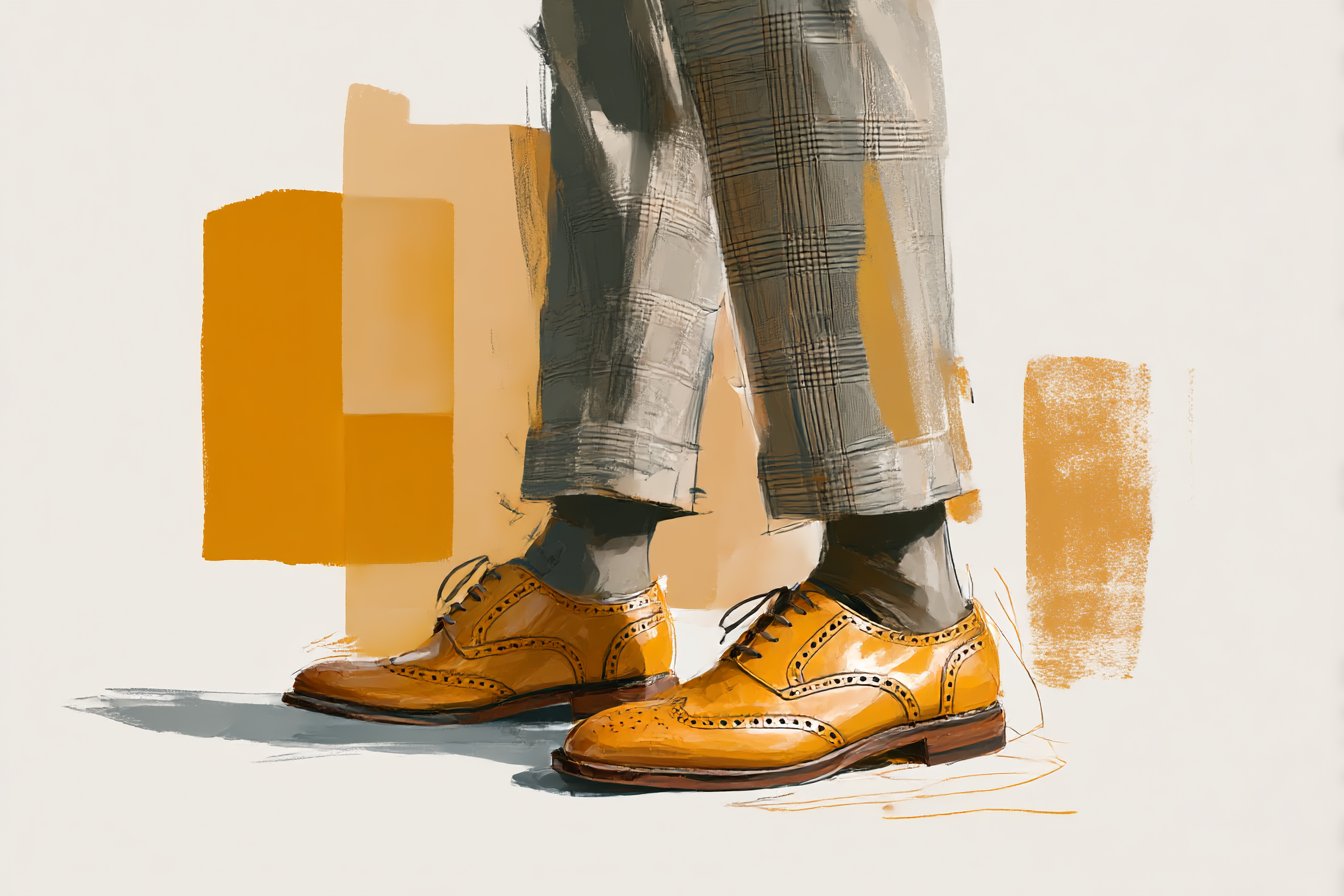
Look down at my own feet right now and you’ll see a nice cross-section of this new-old British footwear. Yes; alongside those ancient-but-still-beautiful Oxfords of my Grandfathers (which I break out twice a year for ceremonies where I need to look particularly adult) I’ve also got Tricker’s boots with hideously chunky commando soles that I’ll wear with suits and jeans alike, sleeker Derbies from a tiny London workshop that will (somehow) work with everything from chinos to shorts, and loafers I had custom-made that have moulded to my feet from years of wear.
What all of these shoes have in common isn’t a specific style but a commitment to quality and longevity that feels particularly important right now. In a world of throwaway fashion at a time of serious environmental issues; shoes that will last your whole life and be repaired time and time again start to feel like the antidote. My grandfather’s Oxfords have already been through more lives than I have and if I look after them, the shoes I’ve fallen in love with this last month will do the same for my children.
Kind of amazing when you think about it. So next time you think about looking for some new shoes, don’t just fall back on our old stalwarts. Explore what this new guard of British shoemakers are producing.
Shoes made with the best techniques in the world that look perfectly at home in 2019. Trust me, once you’ve tried a pair of properly British-made shoes you’ll never go back. Your wallet might hate you but your feet will thank you every time you wear them.
And you’ll be helping to keep wonderful British skills alive in the process.