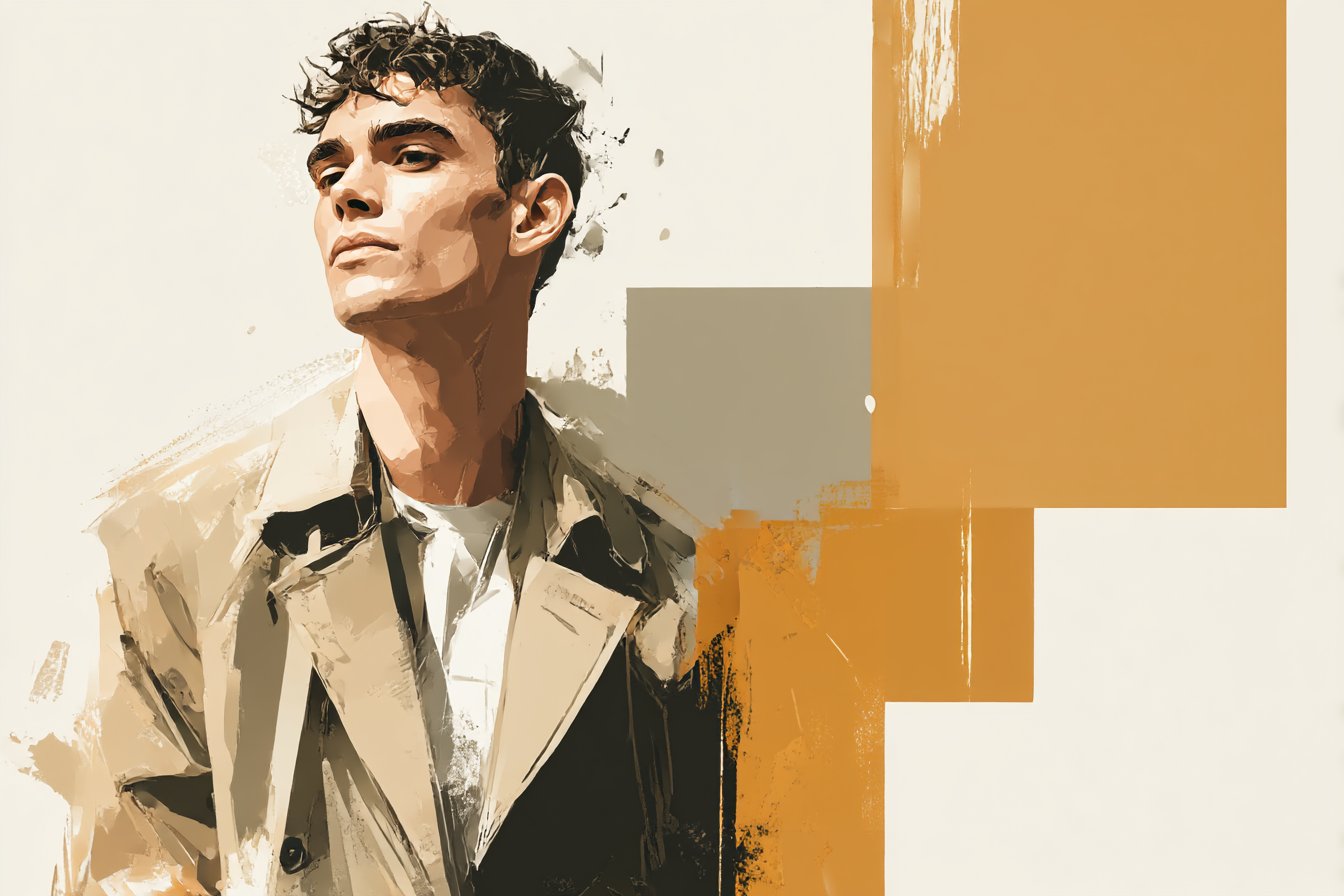
Every time I’m abroad for fashion week and someone discovers I’m British, there’s this moment – this predictable, almost scripted exchange – where they say something like, “Oh, British style! Bowler hats and umbrellas, right?” And I stand there, usually clutching some horrifically overpriced coffee, wondering if I should explain that I’ve literally never seen anyone under 80 wear a bowler hat in my entire life, except maybe at Royal Ascot or in tourist-trap London souvenir shops. The last time this happened in Milan, I nearly choked on my espresso when the guy followed up with, “You must wear a lot of tweed!” Mate, I’m from Manchester.
The only tweed in my childhood home was a small patch on my grandad’s flat cap that he wore to the bookies every Saturday. It’s 2024, and somehow the international perception of British men’s style remains frozen somewhere between a 1950s Ealing comedy and an early 2000s Hugh Grant film. Reality check: British blokes today are about as likely to wear a bowler hat and carry a tightly furled umbrella as they are to ride a penny-farthing to work or communicate exclusively in Cockney rhyming slang.
Our style identity has moved on, evolved, fragmented, and reassembled into something far more interesting than these dusty stereotypes suggest. So let’s talk about what British style actually means now, from someone who spends his life documenting it.

For starters, British style in 2024 is gloriously, chaotically regional.
London fashion is no more representative of British style as a whole than New York is of all American dressing. Manchester has its own thing going on with its post-industrial workwear meets electronic music scene aesthetic. Liverpool men still have that slightly more dandyish, dressed-up approach (don’t ever tell a Scouser I said this, but their attention to grooming puts most other cities to shame).
Newcastle lads will brave hypothermia before sacrificing a look, wearing shirt sleeves in December with a resilience that borders on medical marvel. Birmingham has this fascinating fusion of traditional South Asian influences with British streetwear. Glasgow’s style combines practical weather-resistance (necessary) with a certain artistic flair that comes from having one of Europe’s best art schools in the city center.  I remember covering a menswear event in Leeds a couple years back and being struck by how different the interpretation of “smart casual” was from what I’d see in London.
There was a sturdiness to it, less concerned with fleeting trends and more with lasting power – clothes that could handle a sudden downpour, transition from office to decent pub, and not fall apart after three washes. It wasn’t unfashionable by any stretch; it was just fashion with different priorities. What unifies contemporary British style, if anything, is its relationship with class – the great unspoken (or rather, constantly spoken about but never resolved) British preoccupation.
Our clothes have always been social signifiers, but the codes have gotten more complex. The upper classes now deliberately dress down in well-worn barbour jackets and inherited jumpers with holes in the elbows, while guys who grew up on council estates might save for months for a crisp designer piece. The old rules where you could spot someone’s background from their shoes alone have been delightfully scrambled.
Take workwear, for instance – once the actual uniform of the working class, now enthusiastically adopted across social boundaries. Brands like Universal Works, Albam, and Labour and Wait have built their identities around durable clothes with honest materials and minimal fuss. There’s something quintessentially British about this understated functionality that prioritizes craft over showiness.
It’s clothes for getting things done rather than merely being seen, which feels aligned with our national discomfort around appearing to try too hard. Then there’s our ongoing love affair with subcultural style. While other countries certainly have their youth movements, nowhere seems to generate quite so many distinctive tribes as Britain, each with their own aesthetic codes.
From the original teddy boys to mods, skinheads (before the far-right hijacked their look), punks, casuals, ravers, jungle, garage, grime, and countless micro-scenes in between, we’re obsessed with these visual identity markers. Even as tribalism has fractured in the internet age, you’ll still find British men signaling their music loyalty through their clothing choices, whether it’s the Stone Island and CP Company beloved by football casuals and grime artists alike, or the baggy skatewear aesthetic that crossed over from Parks to clubs. Just last weekend I was in a pub in Sheffield where I could identify at least five distinct style tribes just glancing around the room – from the post-industrial tech-wear guys in black cargo pants and limited-release trainers, to the neo-mod revivalists with their Fred Perry and immaculate haircuts, to the festival-ready psychedelic throwback crowd in vintage fleeces and bucket hats.
This magpie approach, where we borrow from our subcultural past while adding contemporary twists, feels uniquely British.  Speaking of uniquely British – what about tailoring? Yes, Savile Row still exists, thank God, preserving craft techniques that would otherwise be lost. But it’s a million miles from how most British men engage with suits and formal clothes.
The reality is that British tailoring in 2024 is far more about companies like Suit Direct and Slaters than it is Anderson & Sheppard or Henry Poole. Even mid-range stalwarts like Charles Tyrwhitt and T.M. Lewin have struggled as office dress codes have relaxed beyond recognition.
You Might Also Like
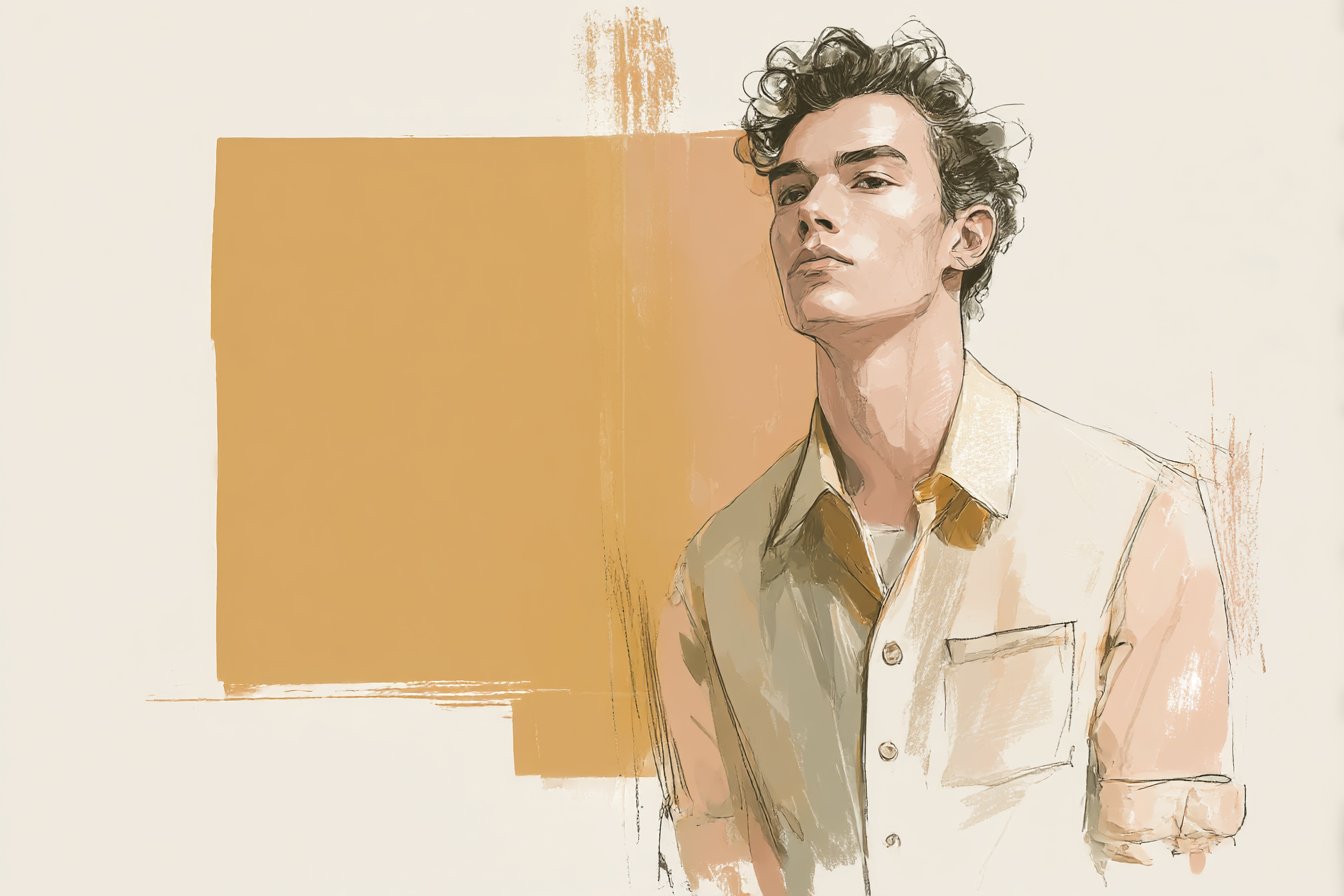
The pandemic effectively killed the everyday suit for many British men, accelerating a trend that was already in motion. But that doesn’t mean formal style is dead – it’s just radically transformed. In its place, we’ve developed what I call “smart-adaptable” – clothes that can flex between multiple social contexts without looking out of place.
A well-chosen overshirt that works for both the office and the pub. Trainers smart enough for most workplaces but comfortable enough for the commute. The death of the traditional suit hasn’t led to a collapse in standards – it’s created space for more personal expression within the boundaries of “appropriate.” And here’s where I think British style in 2024 really distinguishes itself: the eclectic mix-and-match approach.
We’re less reverential about fashion “rules” than Italians, less concerned with minimalist perfection than Scandinavians, and less driven by statements than Americans. A typical British guy might wear Japanese selvedge jeans with a vintage football shirt under a locally-made waxed jacket and limited-edition trainers – crossing price points, eras, and style categories with cheerful disregard for conventional boundaries. This magpie quality – taking inspiration from workwear, sportswear, military surplus, and traditional tailoring all at once – feels like our most distinct contribution to modern men’s style.
It’s partly born from necessity (our weather demands layering and adaptability) and partly from our national character that values individuality while being suspicious of anyone who seems too fashionable. My friend Raj, who runs a menswear shop in Manchester, has this theory that British men are actually far more knowledgeable about clothes than they let on, but deliberately downplay their interest to avoid seeming vain. “They’ll come in and casually drop incredibly specific details about Japanese loopwheel manufacturing or military spec zippers, then act like they just happened to know that,” he told me.
“There’s this performance of accidental style that feels very British.”  I see this in action constantly – blokes who can talk for hours about football statistics or craft beer or obscure bands will suddenly develop selective amnesia when complimented on their jacket. “This old thing? Had it for years.
Think my girlfriend picked it out, actually.” Meanwhile, it’s a limited edition collaboration they queued for at 6am on a Saturday. The other element that defines contemporary British style is our weather, which remains as much a fashion designer as any human. No other country (except perhaps Scotland, which technically makes my point about regionalism) requires the layering dexterity and meteorological defensive strategy that British weather demands.
I maintain that our climate has made us better, more creative dressers through necessity – when you might encounter all four seasons before lunch, you learn to construct outfits with contingency plans built in. Brands that understand this reality do particularly well here. Private White V.C. with their weatherproof cotton Ventile jackets, Albam’s perfect mid-layers, Universal Works’ adaptable overshirts, and Folk’s cleverly detailed transitional pieces all speak to this need for clothes that can handle our climate’s mood swings.
Even our highstreet reflects this – try finding a decent selection of proper coats in an American mall compared to any British shopping center. What you won’t generally find in authentic British style is ostentation. Yes, there are exceptions – the logo-heavy designer streetwear beloved in certain circles, the flash suits and statement watches you’ll spot in City wine bars on Thursday nights – but overwhelmingly, British men tend toward understatement.
Quality, when it appears, often hides in the details – the linings, the stitching, the provenance of materials rather than obvious branding. It’s clothes to be appreciated by those who know, rather than everyone who happens to pass by. This quality reaches its apotheosis in what I think of as the grand tradition of British “stealth wealth” dressing – clothes that signal success only to those fluent in the code.
The perfectly cut but utterly plain cashmere overcoat.

The handmade shoes that could almost be from any decent high street shop unless you know what welting details to look for. The handmade watch with no logo on the dial.
It’s exclusivity through insider knowledge rather than flashy signals, and it remains a powerful current in British style. Look, we’re not perfect. British men can still be painfully resistant to anything that might be considered flamboyant or experimental.
Our highstreets are still dominated by the same handful of massive chains selling slight variations on the same basic items. Too many blokes still associate dressing well with being gay or narcissistic or somehow un-masculine (thankfully this is changing with younger generations). But what we’ve developed in its place – this pragmatic, individualistic, regionally diverse approach to dressing – feels genuine and earned rather than exported from a fashion house’s headquarters.
So the next time someone asks me about British style and bowler hats, I think I’ll show them a photo of the crowd at a mid-sized town’s Saturday night main street – the incredible diversity of influences, the tribal markers, the surprising attention to detail, the weatherproof adaptability, and most of all, the sense that clothes are important but never the most important thing. That’s British style in 2024 – adaptive, resilient, regionally specific, class-conscious but increasingly class-fluid, tribal but permeable, and a million miles from the dusty stereotypes that somehow still define us abroad. No bowler hat required.